Scaling a Web Scraping Pipeline Into a Production AI Feature
Render pages cleanly, extract their content reliably.
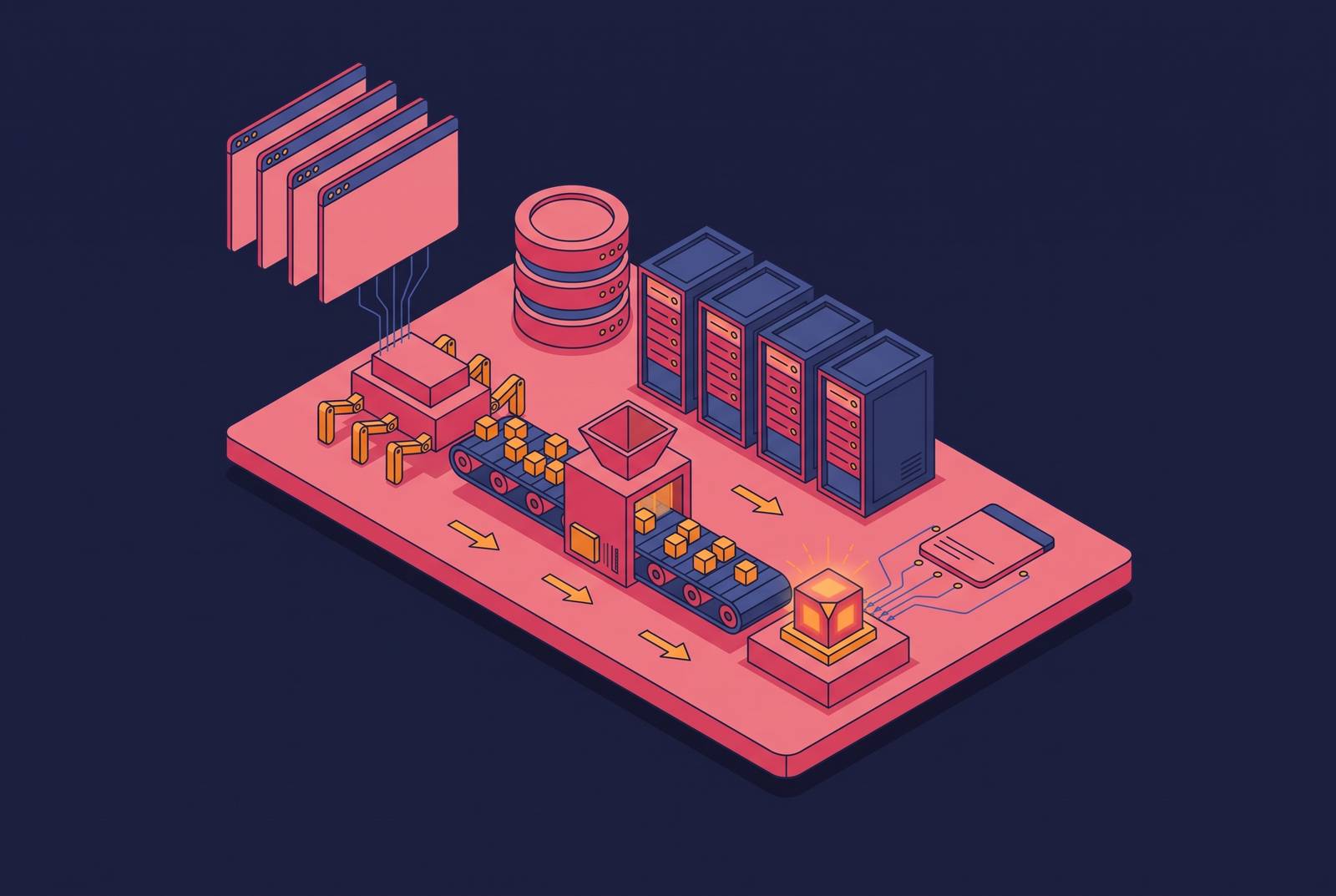
A web scraping pipeline for AI in production must fetch or render pages, clean their content, extract and validate fields, and refresh downstream storage when the sources change. Scaling it means solving cleanliness, reliability, freshness, and structured output together. The teams that ship fastest treat this pipeline as infrastructure they own and compose from existing components.
Why web scraping for AI is a different engineering problem than web scraping for data
7Seers shows how collecting web pages differs from giving an AI feature evidence it can reason over. Its scraping problem became a rendering and browser-automation problem, with anti-bot restrictions behind it. The success criterion had shifted. The focus shifted from whether data arrived to whether a language model could reason coherently over it. A pipeline can pass the first test while failing the second without raising an error.
That silent failure changes the engineering task. A structurally valid document can contain none of the content the model needs, yet pass through the pipeline as a successful result. A typical web page is 60–70% noise relative to its actual content, including navigation menus, cookie banners, and JavaScript loaders. Those elements consume tokens and pull attention away from the evidence.
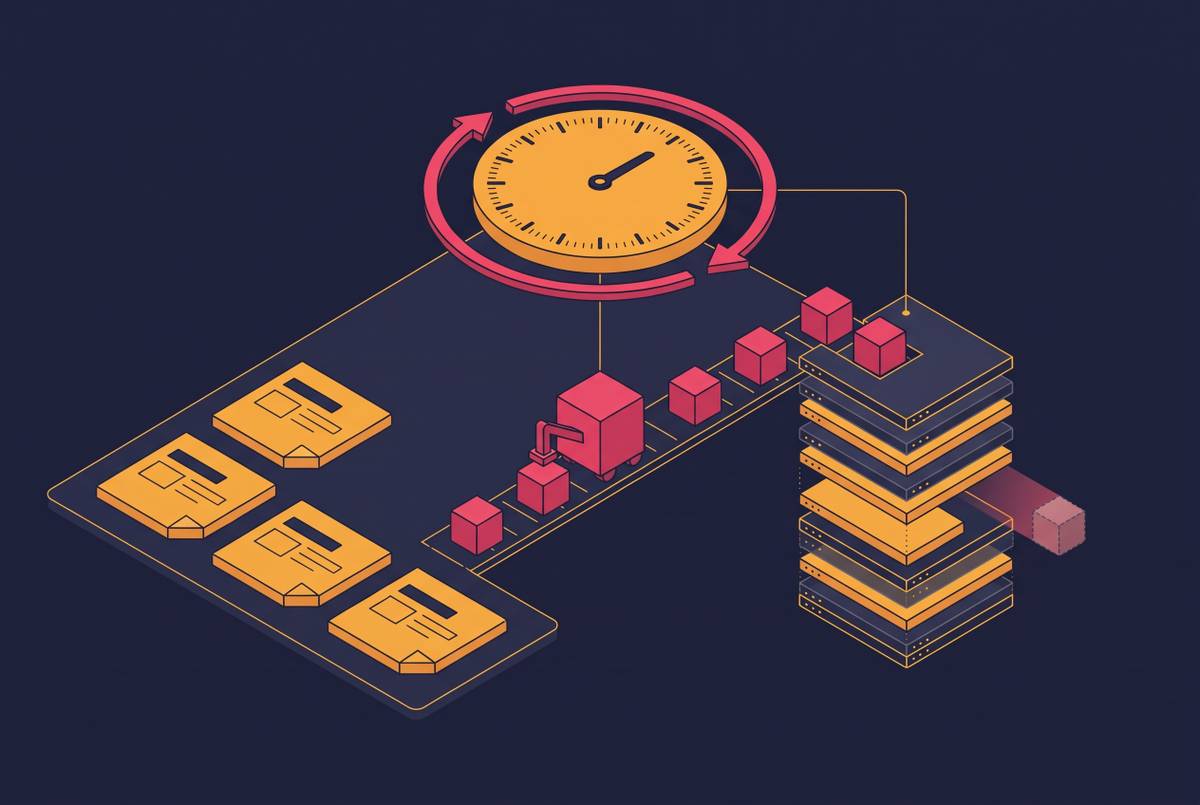
Freshness adds another condition to successful delivery. LLMs are frozen at training time, so current-topic queries need current external evidence. A RAG system grounded in week-old policy data can give wrong answers, while a job-matching engine using stale listings misrepresents the market. The input can expire within days. Retrieval alone does not solve that problem unless the pipeline also keeps the retrieved material current.
Why the output format is actually the first bottleneck to solve
The downstream consumer determines what a usable document looks like. For summarization or human-facing content, clean Markdown preserves the text and heading hierarchy without the clutter of raw HTML. For software, JSON supplies structured fields, which save another stage from having to interpret prose. This choice belongs at the start of design. It defines the contract that fetching, rendering, and extraction must fulfill.
Raw HTML is a poor default for that contract because nested containers, navigation, and loaders compete with useful text. Conversion is therefore not a final polish step. It shapes the token budget, retrieval accuracy, chunking strategy, and embedding quality. Markdown headings preserve boundaries that the chunking phase of RAG uses to organize content. Removing markup without preserving those boundaries can leave readable text that is less useful for retrieval.
Purpose-built LLM-ready APIs aim to return validated, schema-consistent data, while general-purpose scrapers may leave the downstream pipeline holding raw extracted content. A successful fetch is not the finished product. The engineering comparison is how much work remains before the output is safe and useful for its intended consumer.
How the JavaScript rendering gap breaks naive pipelines and what actually fills it
A format converter cannot bring back content that never arrived. The majority of production content sources render their actual content through JavaScript, so a plain HTTP request can return only a sparse shell and loader references. BeautifulSoup can parse that shell without complaint. The pipeline reports success, and the model receives almost nothing to reason from. There is no exception or stack trace to expose the missing evidence.
The 7Seers Playwright story anchors the progression from naive fetching to browser automation and then anti-bot friction. Playwright supplies full JavaScript execution, network interception, and device emulation. Although built primarily for end-to-end testing, it also supports scraping and has become the default choice for most new scraping projects. Rendering brings in the missing content, but adds more work to keep the pipeline running. The pipeline that drives the browser must deal with rate limiting, CAPTCHAs, and IP blocks.
The recommended path starts before browser automation. An official API or XHR JSON comes first, followed by embedded JSON, with Playwright or a browser agent used when JavaScript, login, or interaction requires it. LLM extraction is reserved for small, reviewed cleanup. At the agent layer, where to navigate and what to extract stay separate from bot protection, IP rotation, and request timing. Managed infrastructure can do that transport work and keep it out of the agent’s code.
The three extraction patterns and when each one is appropriate at scale
Once content is available, source stability and volume determine how to extract it. Code generation works well for high-volume runs on sources that stay the same because an LLM looks at the HTML once and builds a deterministic script. Later runs use that script without paying for AI extraction each time. When the layout changes, the script must be generated again, which avoids repeated model calls.
Direct LLM extraction makes the opposite tradeoff. It feeds cleaned HTML to a model with natural-language instructions, which suits variable layouts and ad-hoc requests where selectors break. That flexibility takes more time and comes with an API cost for each page. Vision-based extraction goes further by interpreting screenshots and checking extracted data against what users actually see. It is the slowest and most expensive pattern, suited to complex layouts or a verification layer.
The efficient production arrangement combines these complementary patterns, using generated code for bulk runs, direct LLM extraction as a fallback on layout changes, and vision as a quality gate. Kadoa’s 2026 analysis describes agents monitoring generated scripts and regenerating code when sites change. That self-healing behavior reduces the wait for an engineer to repair a broken selector without running an agent on every extraction.
ASG-LLM provides research backing for generating reusable extraction code. The September 2026 paper describes creating a scraping module from one successful browser session trace for security-sensitive environments where selectors alone are insufficient. Its multi-stage filtering removes 94.1% of the captured HTTP traffic that is not relevant. The important architectural distinction is reuse. Model-assisted setup produces a module that can do subsequent extraction work.
Schema-driven structured extraction as the right abstraction for AI pipelines
The extraction method determines how content is found, but the schema determines what the pipeline can accept. Defining a JSON schema before extraction gives each field an expected shape that the next stage can use. Pydantic in Python and Zod in TypeScript enforce that shape in production AI pipelines. Validation then checks extracted values against expected types and ranges before downstream use.
Semantic extraction separates that contract from the page’s markup. An extractor can recognize “Chief Technology Officer” near a person’s name and headshot as an executive title without depending on a particular HTML tag. The field definition stays stable even when the page structure does not. The explicit output contract lets software apply deterministic checks and audit what the extraction produced.
LandingAgent’s 2026 paper gives a concrete example of this approach using Claude Sonnet 4.6. Its brand extraction includes founding thesis, positioning statement, market and audience data, brand expression, and maturity signals. These are fields for entity understanding. The output is validated against a JSON schema and stored as brand_extraction.json, while website structure is separately validated and stored as website_extraction.json.
Why pipeline reliability requires treating website change as a trigger, not a notification
Kadoa’s 2026 analysis describes a customer spending a large share of data engineering time fixing scrapers. A changed class name, a redesign, or a new cookie banner could silently break extraction. Maintenance became the main job. That case shows why website change must be treated as a normal operating condition.
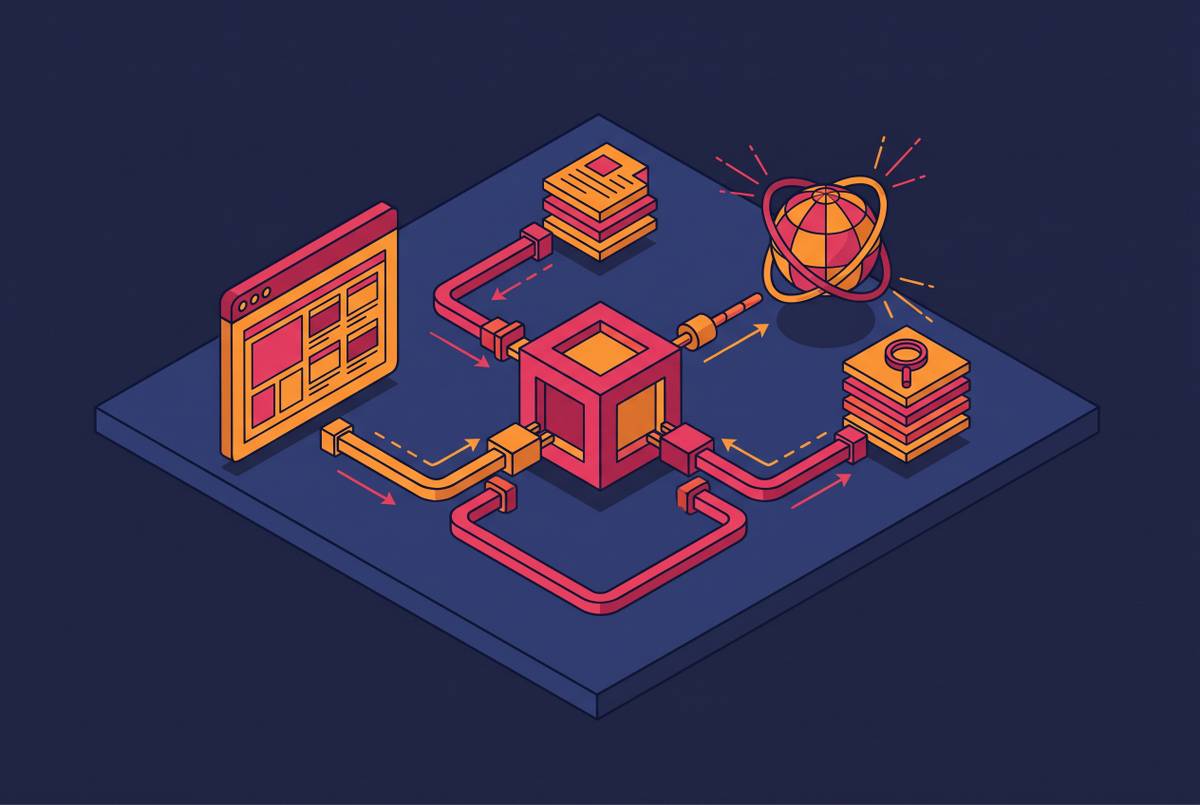
A production response begins with a structured webhook payload entering conditional routing logic. Depending on the change, the pipeline can re-fetch, re-extract, re-chunk, re-embed, or escalate an ambiguous or high-stakes case to a human. No human is needed in the initial loop. A dashboard notification alone leaves the repair disconnected from the event that requires it.
Semantic diff helps decide which events deserve that work. Natural-language instructions spell out which changes matter, so the checks go beyond exact comparisons. An agent watching for new products that competitors announce should ignore testimonials that rotate, timestamps, and small changes to the layout. Exact diff cannot make that distinction by itself. Semantic filtering reduces the noise that would otherwise compete with meaningful changes.
The tools in this layer serve different operating needs. Visualping’s Q1 2026 AI model upgrades reduced false positives on cosmetically noisy pages. Fluxguard combines proxy-based crawling for region-specific content with AI prioritization and summarization, while changedetection.io offers open-source deployment either self-hosted or in the cloud. For RAG, a change-triggered re-embed is the mechanism that keeps indexed knowledge current, and each refresh also adds extraction and processing work.
How cost and accuracy interact non-linearly as extraction volume scales
A 2025 McGill University study gives the strongest reason to question how much to trust LLMs with browsers in production. A major LLM with web browsing had accuracy ranging from zero to around three-quarters when it tried the same URLs more than once. That is not a dependable extraction contract. A successful demonstration or a few accurate spot checks cannot establish that the next run will produce consistent data. Better access to the web does not remove model variability.
Validation checks for expected types, allowed ranges, schema consistency, and output consistency catch errors that raw extraction misses. Vision and direct LLM extraction can both misinterpret content, including financial KPIs presented in different layouts. A valid shape is necessary but not sufficient. The validation layer must check values as well as structure before the output reaches downstream consumers.
Grounding has a related limit. A citation can point to a correct source without faithfully reflecting how the model formed its answer. Web evidence reduces hallucinations but does not eliminate them. Supplying a page and attaching a citation do not, by themselves, prove that the resulting answer follows from that page.
The economic constraint becomes sharper at tens of millions of pages. A fixed per-page fee alone scales linearly, but that simple multiplication is not a full production benchmark. Direct LLM processing is slower, while layout changes, fallback extraction, visual verification, and freshness updates add work around the bulk run. Costs add up across those layers, on top of the cost of the first extraction. Generated code amortizes the AI setup cost over many runs, leaving the more expensive methods for cases that need them.
The agentic architecture that emerges when all these layers are treated as infrastructure
In this architecture, web scraping is a tool the agent can use. Today’s agents use a foundation model along with resources outside it for planning, memory, and tool use. Browser Use demonstrates full browser agency as a viable tool-calling pattern and reports a high success rate on the WebVoyager benchmark. Browser agency is available when the task requires it. It does not make every fetch a browser task or every extraction a model call.
The production choice is build, buy, or compose. Crawl4AI is a Playwright-based open-source framework that produces clean Markdown or structured JSON and supports LLM extraction through developer-defined JSON schemas. Managed APIs can handle bot protection, IP rotation, and request timing beneath the agent. Open-source scrapers need proxy infrastructure to run, while managed services take on that work for a predictable cost and a support contract. IP-provenance audit requirements and internal operations capacity shape the choice.
Owning this infrastructure means taking charge of the contracts between its layers. Rendering supplies the actual page content, extraction turns it into the required form, and validation controls what can move downstream. Change detection starts the refresh chain, while cost control keeps the bulk path free of costly interpretation. Each layer has a distinct job. That division lets a team build the AI feature without also rebuilding every mechanism needed to keep its web evidence usable.