Compliance Considerations for Enriching User Data at Signup
Data enrichment at signup is legally required, not just technically smart.

Enriching a signup form with company data, firmographics, or behavioral signals is a regulated act of data processing. It always has been, but most teams still build it like a UX feature, wiring up the API call without ever asking which law governs it. That's backwards, and it's the mistake this piece is here to correct: map the real obligations, GDPR, CCPA, and the growing pile of state laws, onto the actual decisions a developer makes building that call. What legal basis to use, what to disclose, which fields to keep, how to architect the thing so it survives a deletion request six months later.
Signup is where this gets tricky. A user hands over one piece of data, an email address, and the system immediately turns it into ten or twenty: company size, industry, tech stack, headcount, sometimes a job title pulled from a professional network. That expansion happens before the user has done anything else, sometimes before the user has taken any further action.
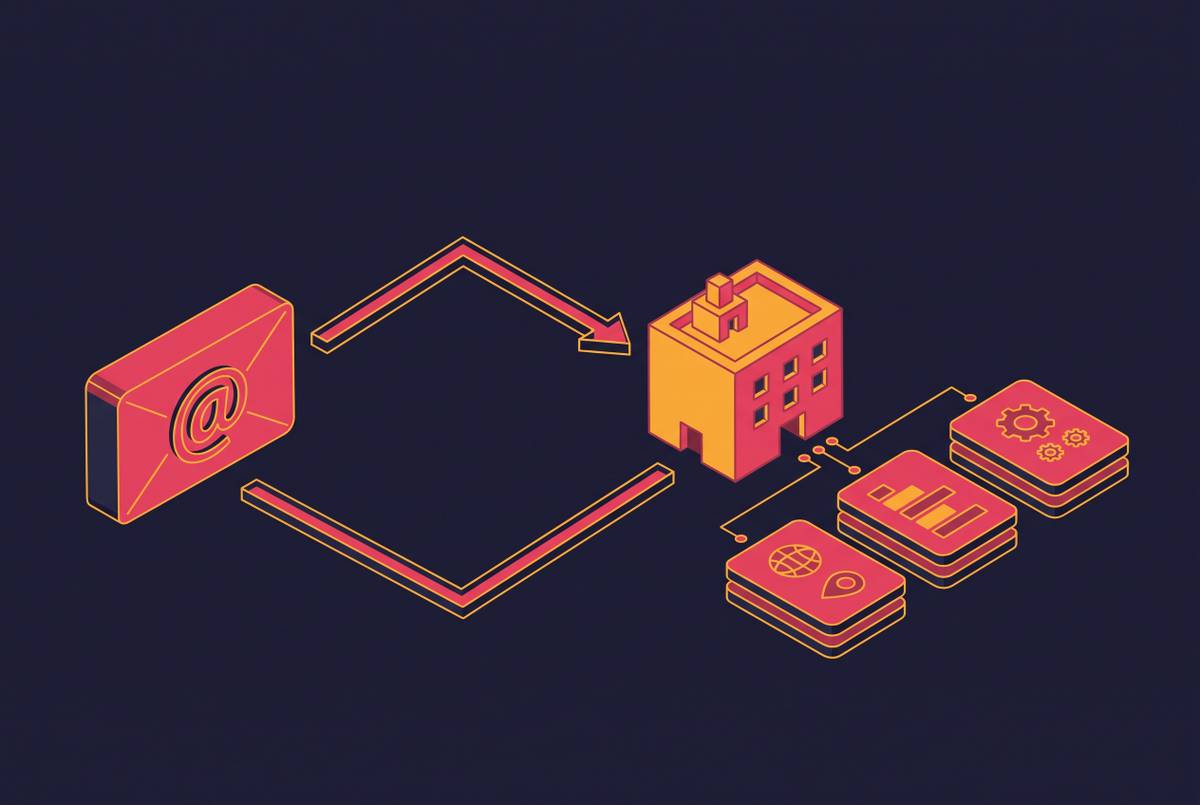
Three patterns cover most of what teams actually build. Internal enrichment matches the new signup against records already sitting in the product's own CRM or event logs, so no new data enters the system. External enrichment calls a third-party API, a firmographic database or B2B data vendor, using the submitted email or domain as the query key. Derived enrichment skips the external call entirely and infers company or role straight from the email domain: gmail.com tells you nothing, acme-corp.com tells you a lot.
Enrichment is allowed under every regime covered here. Most teams skip a narrower question: what has to be built and disclosed to make this specific call, on this specific data, defensible.
The regulatory environment developers are building into right now
GDPR enforcement has not slowed down. Cumulative fines have reached €7.1 billion since 2018, with €1.2 billion of that landing in 2024 alone. The ceiling is 4% of global annual revenue or €20 million, whichever is bigger. For a SaaS company still finding its footing, exposure grows in lockstep with growth itself: the better the traction, the bigger the number on the table. The fine usually isn't what hurts most, either. Enforcement orders can force a company to stop processing EU resident data outright, which for a product built around European signups works less like a penalty and more like a kill switch.
CCPA has hardened on a similar timeline. The California Privacy Protection Agency killed the 30-day cure period as of January 1, 2023, so violations now draw penalties immediately, with no grace window to fix things quietly. California has since posted a string of record settlements, each larger than the last: against Tractor Supply in September 2025, against Disney in February 2026, against GM in May 2026. Anyone still treating California enforcement as mostly theoretical needs to update that assumption.
The state landscape has gotten a lot more crowded too. The IAPP tracker shows 19 states now have comprehensive privacy laws in effect. Indiana, Kentucky, and Rhode Island joined on January 1, and Arkansas's amendments took effect July 1. Combined, these laws cover roughly 150 million Americans, something like 43% of the population, a figure a guide from dataslayer.ai attributes to 20 states. California remains the only state that explicitly pulls B2B contact data into its privacy law's scope, so anyone building a B2B product specifically has to account for that now. The others haven't gone there yet. The trend line points toward it, not away.
Then there's the EU AI Act, which hit a major application milestone on August 2, 2026, though it won't be fully in force until August 2, 2028. Teams feeding enrichment data into LLM-powered onboarding, lead scoring, or routing logic now have Article 10's data governance rules and its transparency requirements stacking on top of GDPR, not replacing it.
None of this respects company headquarters. A startup built entirely in the US that signs up a single EU user is on the hook for GDPR regardless of where its servers sit. CCPA works the same way in reverse: it applies to any business buying, selling, or sharing personal information belonging to 100,000 or more California consumers or households a year, no matter where that business is incorporated.
Choosing a lawful basis for the enrichment call itself
GDPR Article 6 requires a lawful basis for every processing operation, full stop. Enrichment at signup counts as its own processing operation, not a footnote to the signup itself, and GDPR requires that basis to be documented, not just assumed somewhere in the back of someone's head.
Two bases matter here, and legitimate interest is the one most B2B teams should actually reach for. Under Article 6(1)(f), it works for B2B enrichment when the interest behind it is necessary and doesn't override the individual's own rights. Many B2B data providers rely on legitimate interest for their European contact records. But legitimate interest isn't a checkbox: it requires a written Legitimate Interest Assessment (LIA) on file, and relying on it without one is a liability sitting there waiting to be found during an audit. Legitimate interest also doesn't cover marketing cookies or behavioral tracking under GDPR, so enrichment logic and marketing tracking need to stay on separate tracks, architecturally and legally.
Consent is the other option, and it's a much higher bar to clear at signup. It becomes mandatory rather than optional if the enrichment touches special category data, or if the product is consumer-facing rather than B2B.
CCPA doesn't ask for a pre-declared lawful basis the way GDPR does. It runs on an opt-out model instead. But if enriched data gets shared or sold, including handing it to a vendor in a way that meets CCPA's fairly broad definition of "sale," opt-out mechanisms and disclosures kick in immediately, right at signup.
Treating a checked terms-of-service box as consent for enrichment is a mistake that shows up constantly. It isn't, because GDPR consent has to be specific to the processing being described. GDPR consent has to be specific to the processing being described, and a generic ToS click doesn't describe an enrichment call to a third-party firmographic API. The lawful basis has to be decided and written down before the first line of the enrichment integration gets built, not patched in after legal flags it post-launch.
What transparency at signup requires you to disclose
GDPR Article 13 governs data collected straight from the user, and it requires disclosure at the time of collection: who the controller is, why the data is being processed and under what basis, any legitimate interests being relied on, whether third parties get the data, and what rights the person has over it.
External enrichment triggers its own separate obligation. Article 14 kicks in the moment data comes from a third-party source rather than the user directly. An external enrichment call opens its own disclosure requirement, distinct from Article 13. That means naming the category of source (not a vague "publicly available sources" line), spelling out the person's rights to access, rectification, objection, and erasure, stating the legal basis for the external call, and giving a retention period. It also comes with a clock: disclosure has to happen within one month of obtaining the data, or sooner if the data gets used to contact the person or gets passed to another recipient first. In a signup flow, that's usually the confirmation email or the first in-product message.
CCPA runs its own checklist. Categories of personal information collected have to be disclosed at or before collection, and enriched fields count as collected the moment they land in the record. Each category needs a stated purpose. If any of it gets sold or shared under CCPA's definition, a "Do Not Sell or Share My Personal Information" link has to be visible and working. As of January 1, 2026, opt-out confirmation became mandatory too: businesses now have to show visible confirmation that an opt-out signal, like Global Privacy Control, actually got processed.
A privacy policy that says "we may collect information from third parties" and stops there satisfies neither regime, and regulators have flagged that exact phrasing repeatedly. Specificity is the requirement, not a nice-to-have. A B2B signup flow should name the actual categories of firmographic data being appended (company size, industry, geography, tech stack) and say why each one gets processed.
Data minimization: deciding which enrichment fields are justified
Article 5(1)(c) of GDPR requires data to be adequate, relevant, and limited to what's necessary for the stated purpose, enforced by regulators as a core principle. That's not a suggestion sitting in the preamble. Regulators enforce it as a core principle.
The test that actually works runs field by field: what specific decision does this piece of data enable? If the honest answer is "better segmentation someday," that answer is hoarding with a nicer name. That's hoarding with a nicer name.
Some fields clear the bar easily for a B2B SaaS signup. Company name supports routing. Company size feeds plan recommendations. Industry vertical shapes the onboarding path. Country or region drives compliance routing and localization. Each has a clear, immediate job.
Job title, a direct phone number, a personal LinkedIn profile, and granular tech stack detail need a stronger case before they earn a place in the schema. Each one adds personal data on top of what company-level enrichment already provides, and each needs its own justification rather than a free ride on the company-level basis. For something as low-stakes as a newsletter signup, pulling in anything that identifies a person's role or seniority is disproportionate risk for basically no operational payoff.
Maryland's privacy law, effective October 1, 2025, sets the strictest US bar currently on the books: collection has to be "reasonably necessary and proportionate." Teams with US users should design against Maryland's standard as the baseline. Before launch, every enriched field should sit in a data inventory with a purpose attached, and anything that can't get a purpose written next to it gets cut from the schema. That's not paperwork for its own sake. A purpose attached to every enriched field separates a defensible enrichment pipeline from a liability sitting quietly in a database table.
Vetting your enrichment vendor before the API key goes into production
Handing the enrichment call to a third-party vendor does not hand off responsibility for it. The team stays the data controller, accountable for how the data gets used, for documenting its origin, and for honoring a rights request regardless of whose API produced the field.
Four checks belong in vendor diligence before any key goes into production, and skipping any one of them is a bet the team probably shouldn't take. First: a documented lawful basis. Can the vendor actually produce a Legitimate Interest Assessment on request, or does their compliance story stop at a "GDPR compliant" badge on the marketing page? The badge alone answers nothing. Second: a signed Data Processing Agreement has to exist before a single record gets processed. Operating without one puts the organization in breach no matter how clean the vendor's own practices are. Third: a working rights process on the vendor's side, so that when a user asks for deletion, the enriched fields sourced from that vendor are actually deletable and not stuck in a system nobody can touch. Fourth: security certification, ISO 27001, SOC 2, something verifiable. A vendor offering none of that is a red flag, not a minor gap to note and move past.
Provenance matters past the compliance checklist too. Enrichment responses that come back with source metadata, the actual URL or record a field was pulled from, give compliance teams a traceable line from claim to origin, and that matters a lot when an auditor asks where a specific data point came from. Evaluating an enrichment API means asking not just what value it returned, but whether it can show its work.
For teams feeding enrichment into an automated onboarding or routing pipeline, the EU AI Act's data governance rules under Article 10, fully applicable August 2, 2026, extend into the training and input data those systems rely on. A vendor's provenance documentation now does double duty, serving as both a privacy compliance input and an AI compliance input at once.
Retention, deletion, and connecting enriched fields to rights workflows
Enriched fields don't get a pass on data subject rights just because they came from a vendor instead of the user directly. When someone files a deletion, correction, or access request, the firmographic fields sitting next to their email are part of that record, full stop.
A specific architectural failure occurs often enough to name directly: enriched fields land in a separate table, or stay parked in a third-party system, and never get wired into the account deletion flow. The core account disappears, but the enriched profile stays behind, a compliance failure sitting quietly until someone finds it, usually during an audit rather than during a routine check.
On retention, GDPR doesn't set one universal clock, but it does require that data not outlive its stated purpose. Common practice for B2B contact data caps retention around three years from the last real interaction. Past that point, the legitimate interest basis holding the data in place starts to weaken fast. Whatever the number is, it needs to appear in the privacy notice as an actual period or a clear rule for determining one. "As long as necessary" "As long as necessary" isn't a disclosure. Calling it "as long as necessary" is a dodge.
CCPA's 2026 changes tighten this further. The enhanced right-to-know now lets California consumers reach back to January 2022 or earlier for historical data still on file, so enriched signup data sitting in storage past that window has to be surfaceable on request. And the DELETE Act's DROP platform went live for consumers on January 1, 2026, with data brokers required to check it every 45 days starting August 1, 2026. Any team sourcing enrichment from a data broker feels that indirectly, through the vendor's own compliance posture.
Practically, this means tagging enriched fields at the data-model level with source, enrichment date, legal basis, and retention horizon baked in from the start. That metadata is what turns a rights request into a five-minute lookup instead of a week spent digging through logs by hand. For pipelines where an agent recombines enriched fields with CRM records or transaction history, GDPR's purpose limitation and minimization principles apply with more force, not less: the agent's access should be scoped at design time to exactly the fields its task needs, nothing broader.
Compliant enrichment architecture at signup, end to end
None of this introduces new obligations. It's the same rules from above, mapped onto the actual code path a signup enrichment call runs through.
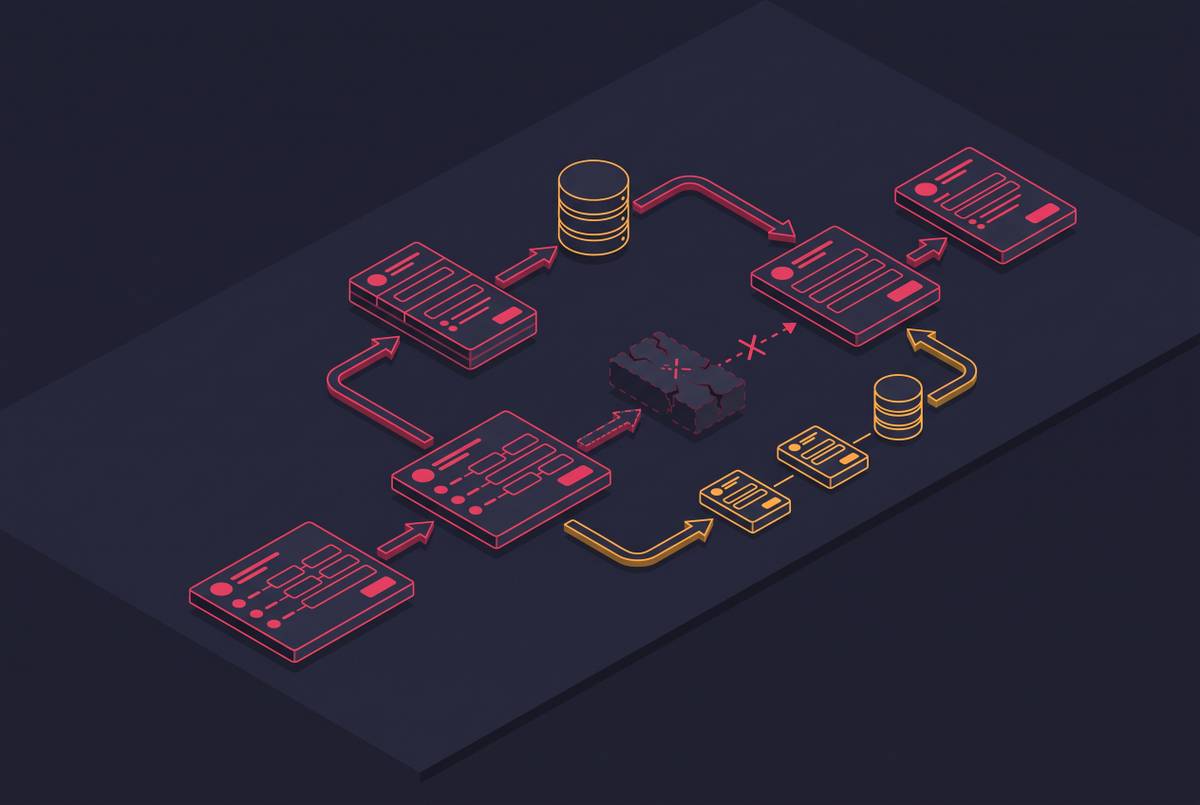
Before the enrichment API gets invoked at all, the system needs a pre-call governance check: confirm the user's jurisdiction, confirm the applicable legal basis is documented for that geography, and flag whether consent, rather than legitimate interest, is required for this particular user. For an EU signup, that means confirming the LIA is on file and the intended use falls inside its stated scope. For a California signup, it means confirming the "Do Not Sell or Share" mechanism is live and that opt-out preference signals are actually being detected and honored, a requirement sharpened by the September 9, 2025 joint enforcement sweep run by California and two other states. For users in other states with opt-out preference signal laws now on the books, the same kind of signal handling needs to be in place and tested, not assumed to work just because it works elsewhere.
Get that pre-call check wrong, and every downstream layer, the lawful basis, the disclosure, the minimized schema, the vetted vendor, inherits the mistake. Get it right, and the rest of the architecture has something solid to stand on.