Reducing Time-to-Value With AI-Powered Onboarding Personalization
AI-powered personalization lifts B2B activation rates from 37% to as high as 54%.
Most SaaS products lose the relationship in the gap between sign-up and the first moment a user sees real value. That gap is where activation dies, and the average B2B activation rate sits at just 37.5%, per Userpilot's 2024 benchmark. Most users never make it across. Companies in AI and machine learning reach activation as high as 54.8%, which raises an obvious question: what are they doing differently?
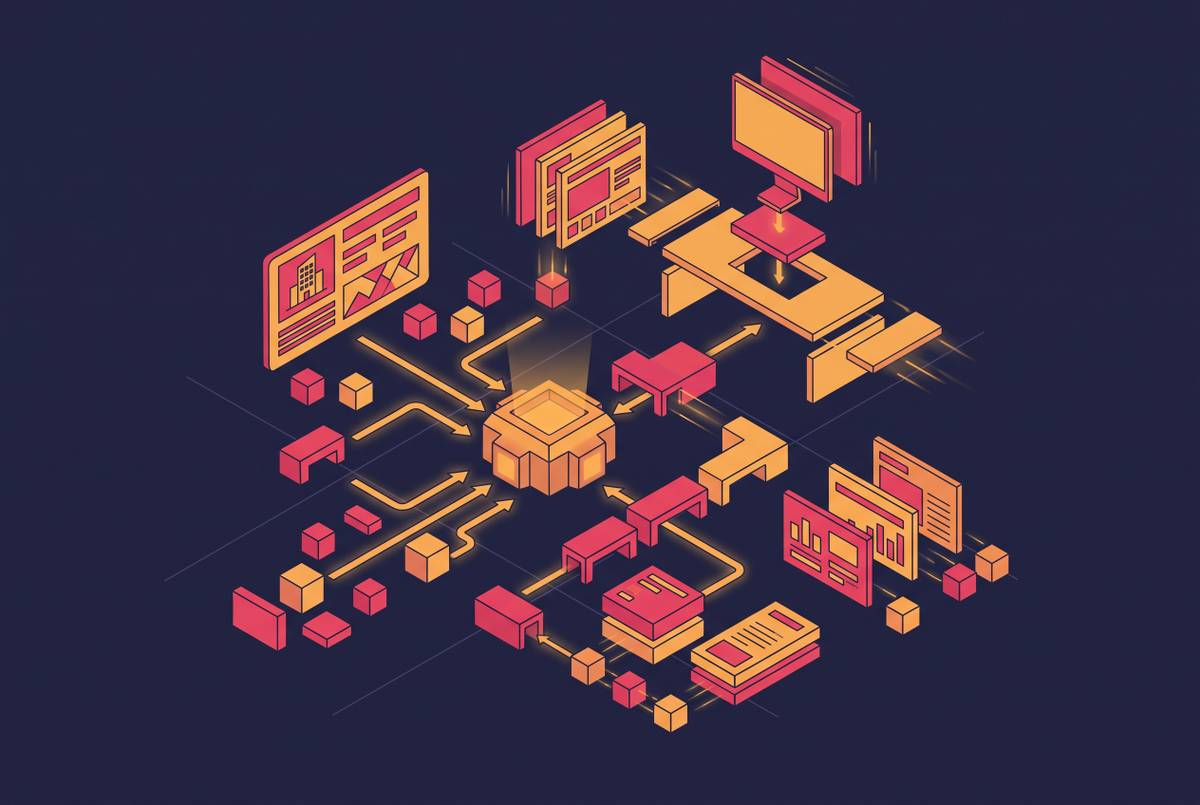
AI personalization improves user activation rates during SaaS onboarding through three mechanics working in combination: behavioral signal capture, adaptive flow routing, and real-time intervention. Signal capture builds a working model of each user from explicit inputs like role and use case, implicit behavioral patterns like time spent per step and features ignored, and contextual factors like industry and company size. Adaptive routing then translates that model into a different path for each user, sequencing content and delivery channels to match how quickly or cautiously someone moves, while real-time intervention catches stall points before a user quietly churns. When all three layers share a common data model and run together, AI-driven onboarding has been shown to lift activation rates by 35 to 50%, compared to the 37.5% average B2B activation rate Userpilot recorded in 2024.
The honest answer rules out a chatbot bolted onto a welcome screen. More than 30% of organizations still run onboarding as a mostly manual process despite the tools available, and the global onboarding software market is set to hit $1.7 billion in 2026, with 81% of organizations planning to invest further in 2025. Money is pouring in. But adding steps, or adding a chat widget, doesn't shrink time-to-value. What shrinks it are three mechanics working together: behavioral signal capture, adaptive flow routing, and real-time intervention. None of them do much alone. Stacked and wired to each other, they close the gap fast.
What "AI-powered onboarding" actually means under the hood
"AI onboarding" gets slapped on everything from a basic if-then rule to genuine machine learning, so the label by itself tells you nothing. Three technologies are actually doing work here, and they should be named.
Machine learning watches behavior across sessions and finds which onboarding paths line up with activation for which kinds of users. Natural language processing runs the in-product help, letting someone type a plain question and get a contextual answer without leaving the screen. Predictive analytics catches the early warning signs, repeated errors, skipped steps, stretches of inactivity, before a user quietly gives up and churns.
A chatbot sitting on top of a static checklist isn't AI-powered onboarding. The real dividing line is whether the system changes its behavior based on what it learns, or whether it's just running a fixed script with a friendlier face. And none of that adaptation is possible without clean signal capture feeding the system in the first place, which is where the real work starts.
How behavioral signal capture forms the foundation every other layer depends on
Before any personalization happens, the system has to actually read the user: what they click, where they hesitate, what they skip, how fast or slow they move through each step.
The signals worth tracking fall into a few buckets. Explicit signals are things the user tells you directly, like the role they picked, the use case they declared, the integration they connected. Implicit signals show up in behavior: time spent per step, features clicked versus ignored, error patterns, how often someone comes back. Contextual signals sit around the user rather than in their actions, things like industry, company size, prior experience with similar products, or where they came from.
Machine learning runs pattern recognition across all of it to build a working model of who this user probably is, not a rigid bucket, but something closer to a set of odds on which path leads them to value fastest. In practice, that shows up as adaptive content sequencing. A remote software engineer might get technical docs and collaboration-tool setup pushed early. An in-office marketing hire might see brand guidelines first. Same product, different order, because the signals pointed different directions.
Up to 40% of onboarding time currently goes to repetitive tasks that could be automated away, and signal capture is what tells the system which of those tasks are actually redundant for a given user. None of this works, though, if the data is messy. Behavioral signals are only as useful as the pipeline delivering them: a poorly structured event stream produces a poorly personalized flow, full stop. And signal capture isn't a one-time intake form. It keeps running through the whole onboarding period, updating the user model as behavior shifts.
Adaptive flow routing: how the system translates signals into a different path for each user
Routing is the decision layer. Given what the system now knows, what should this user see next, in what order, at what pace?
Power users get fast-tracked past the basics straight into advanced features. Cautious explorers get more scaffolding, more confirmation steps, more hand-holding. Same product, two very different journeys. The routing logic adjusts on more than just role or persona too. It can factor in location, prior product experience, even time zone or local compliance needs, down to individual configurations rather than broad buckets.
Delivery channel is part of the path as much as content is. Bite-sized modules sent through Slack, Teams, email, or mobile, wherever the user already spends time, count as a routing decision, not an afterthought. And the system keeps optimizing on its own: it learns from every interaction and adjusts future routing without anyone running a manual A/B test to discover a sequence is underperforming for some segment.
One documented example: an 80-rep B2B SaaS company using Optifai's predictive attrition model cut ramp-up time from 5.2 to 3.7 months, and dropped first-year attrition from 35% to 21%. That kind of shift doesn't come from one clever feature. It comes from the routing logic itself doing the compression.
Adaptive routing isn't three pre-written branches a product team dreamed up in a workshop. The number of genuinely personalized journeys scales with how diverse the user base is, not with how many paths someone bothered to draw on a whiteboard. That's also why teams handling this well can manage more accounts without adding headcount: the routing engine is automating judgment calls that used to sit with a customer success manager, one user at a time.
Real-time intervention: catching the moments when users are about to disengage
Even a well-personalized path won't be perfect. Some users will stall anyway, hit confusion nobody anticipated, or drift quietly toward abandonment without saying a word.
Predictive analytics is what surfaces it, revealing patterns such as the same error hitting twice on the same step, a long stretch of inactivity, a required action skipped, or a return visit where the user doesn't move forward at all. The system steps in before anyone files a support ticket, whether that's a nudge, a tooltip that appears right when it's needed, a proactive chat message, or a flag sent to a CSM. IBM has framed this as machine learning models analyzing patterns in real time to catch where new customers tend to get stuck, so the bottleneck gets fixed fast rather than discovered after the fact.
This isn't a fringe behavior either. Gartner predicts that by 2028, at least 70% of customers will start a customer service interaction through a conversational AI interface. Proactive intervention is becoming the default expectation, not a nice-to-have layered on top.
The effect shows up in real numbers. Hitachi cut onboarding time by 4 days and reduced HR involvement from 20 hours down to 12 hours per new hire, using an AI assistant that handled friction as it happened, according to Business Insider reporting. Texans Credit Union used robotic process automation to bring system access provisioning down from 15 to 20 minutes to under a minute, closing off a delay that used to cause early drop-off before anyone even got started. None of this works, though, without an accurate predictive model behind it, and that model is only as good as the signals feeding it from the very first layer.
How do behavioral signal capture, adaptive routing, and real-time intervention compound to improve activation?
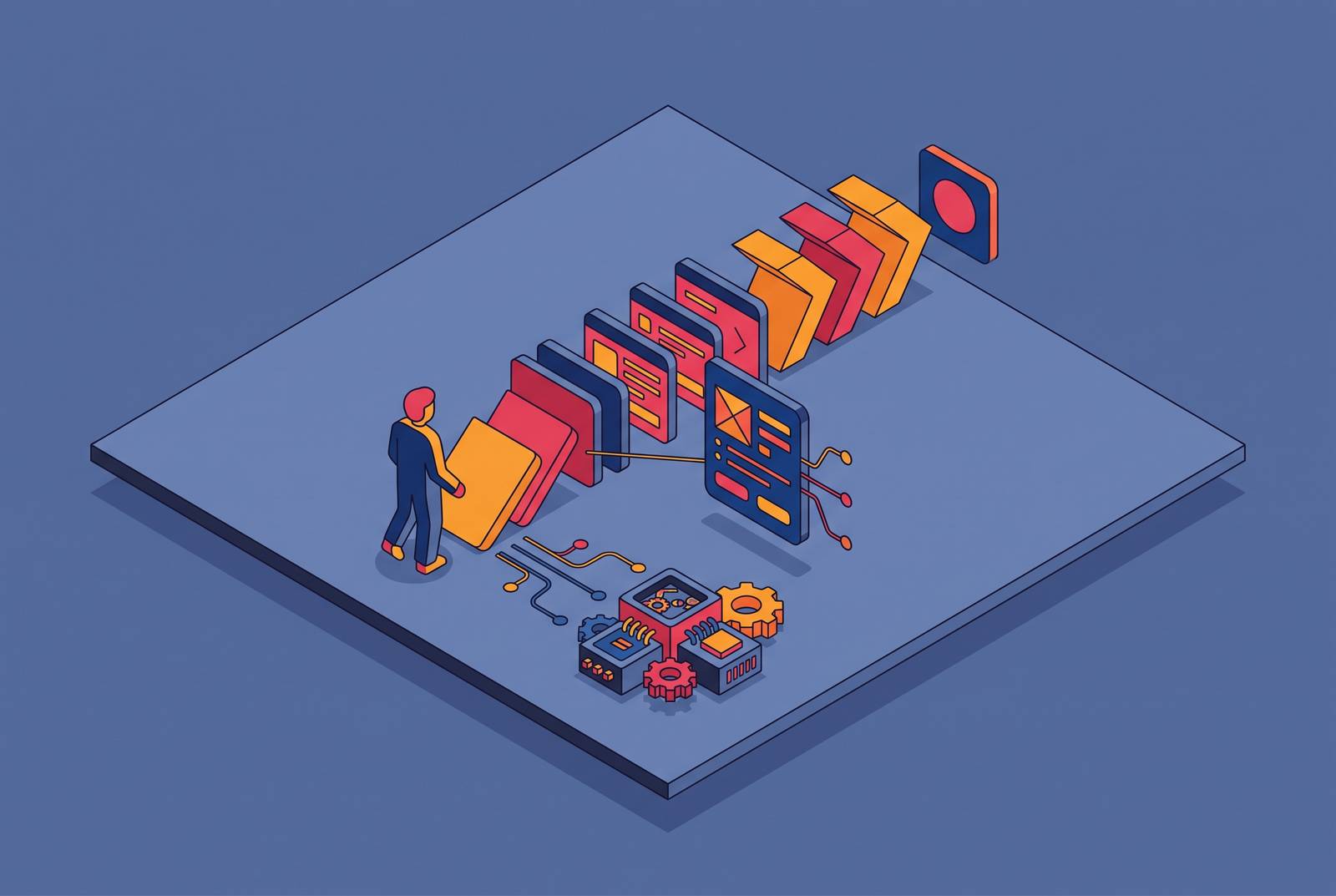
Each layer leans on the one before it. Signal capture is what makes routing possible in the first place. Routing determines what behavior even exists for the intervention layer to react to. Skip a step, and the whole chain gets weaker, not just that one piece.
A system with strong intervention tools but weak signal capture ends up firing nudges at the wrong users at the wrong moment, reactive noise dressed up as help. A system with sharp routing but no intervention layer will personalize the main path beautifully and still lose people the moment an edge case appears.
Put all three together and the results compound rather than add. AI-driven onboarding has been shown to lift activation rates by 35 to 50%, with digital onboarding cutting time-to-value meaningfully, but that kind of result needs all three layers running together, not one flashy feature carrying the load. Even partial adoption moves the number: 65% of companies using digital onboarding report cutting time-to-value by at least 25%. That's a floor, not a ceiling. Reaching the ceiling takes the full stack.
A 2025 inFeedo report found organizations with strong AI onboarding processes saw an 82% improvement in new hire retention and a 40% reduction in time to peak performance, numbers that reflect the system working as a whole rather than any single mechanic doing the heavy lifting. This is also where the scalability argument turns from nice-to-have into commercially serious: teams can manage a lot more accounts without growing headcount, because each layer is automating a function that used to require a human's judgment call.
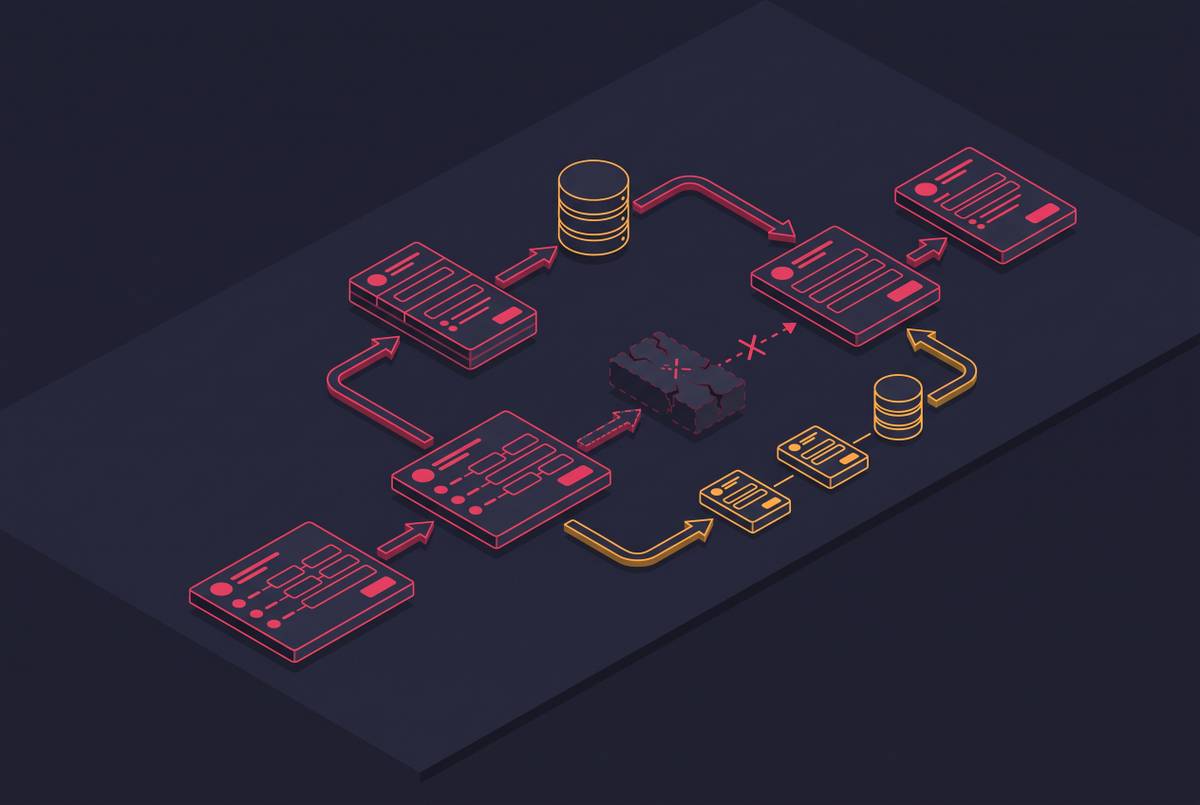
What breaks the compounding effect is treating each layer as a separate purchase. Signal data that never makes it into the routing model. Routing logic that never informs what triggers an intervention. The fix isn't more tools, it's a shared data layer, one model of the user that all three mechanics read from and write to in real time.
What the underlying data infrastructure has to look like for this to work
All three mechanics are only as good as the pipeline feeding them. Personalization quality is a direct function of how clean, current, and well-structured the underlying data is, nothing more mysterious than that.
Behavioral signals need to arrive in real time, in a structured format the model can actually use. A raw event log is not the same thing as input a language model can reason over cleanly. This is where retrieval-augmented generation, RAG, becomes the right architecture: the conversational piece of onboarding retrieves current information at the moment someone asks a question, instead of relying only on whatever was baked in during training. That's the difference between an assistant that answers from what's true right now and one that answers from a stale snapshot.
Static vector stores fall short here, because onboarding guidance has to reflect the product as it exists today, not as it existed when the index was last built. Schema-driven extraction is the better abstraction: define the fields that matter (pricing tiers, feature descriptions, policy terms) and let the extraction layer find them by meaning, regardless of how a given page happens to be laid out. That approach survives a redesign that would break anything built on rigid styling selectors of a certain kind.
IBM's Institute for Business Value found 47% of customer service executives have already adopted partial automation in onboarding. But partial automation sitting on top of fragmented data infrastructure produces partial, brittle results. The data layer is the thing that decides whether automation holds together or falls apart under its own weight.
What teams get wrong when implementing AI onboarding and how to avoid the common failure modes
The most common mistake is bolting AI features onto a flow that was already broken. Personalization and prediction can't fix a value proposition that was never clear to begin with. The aha moment has to exist before AI can help anyone reach it faster, and no amount of clever routing changes that.
Another frequent failure: teams instrument their product heavily, then route all that signal data into a dashboard instead of back into the onboarding flow itself. The loop between observation and adaptation never closes, so all that instrumentation just sits there looking impressive.
Deploying intervention tools without solid predictive accuracy is its own trap. Proactive nudges sent to the wrong person at the wrong time train users to ignore every nudge that follows, a false-positive problem that quietly wrecks the whole intervention layer's credibility. Letting onboarding content go stale causes a related failure: a RAG-grounded assistant retrieving outdated documentation gives confident answers that are simply wrong. Keeping content fresh isn't a setup task done once, it's ongoing infrastructure work that has to keep happening.
Automation can cut manual onboarding workload by roughly half and shrink errors in employee data collection significantly, but only when the underlying pipeline is coherent. Stitching together separate point solutions for signal capture, content delivery, and intervention tends to produce fragility, not efficiency.
Teams starting from scratch do better sequencing this in order rather than launching everything at once. Get signal capture working first. Confirm the model is actually reading users correctly. Layer adaptive routing on top of that. Only then add the intervention capability. Skipping ahead usually means building intervention logic on top of a user model that was already inaccurate.
The activation and retention outcomes teams should actually measure
Time-to-value is the metric that matters most in the end, but it's a lagging one. It tells you what already happened. The leading indicators are what teams should actually be watching day to day, since those are the numbers that predict time-to-value before it's too late to act on it.
Time to first key action is one worth tracking closely: how long does it take a new user to complete the specific in-product action that correlates with them sticking around. Step-level drop-off rates matter too, since they show exactly where the flow is losing people rather than just confirming that it lost them somewhere. Intervention response rate, how often a nudge or proactive message actually leads to the user completing the stalled step, tells you whether the predictive model is earning its keep or just generating noise.
None of these numbers mean much in isolation. Watched together, they show whether the three mechanics, signal capture, routing, and intervention, are actually compounding the way they're supposed to, or whether one of them is quietly dragging the other two down.